 Fri27Nov
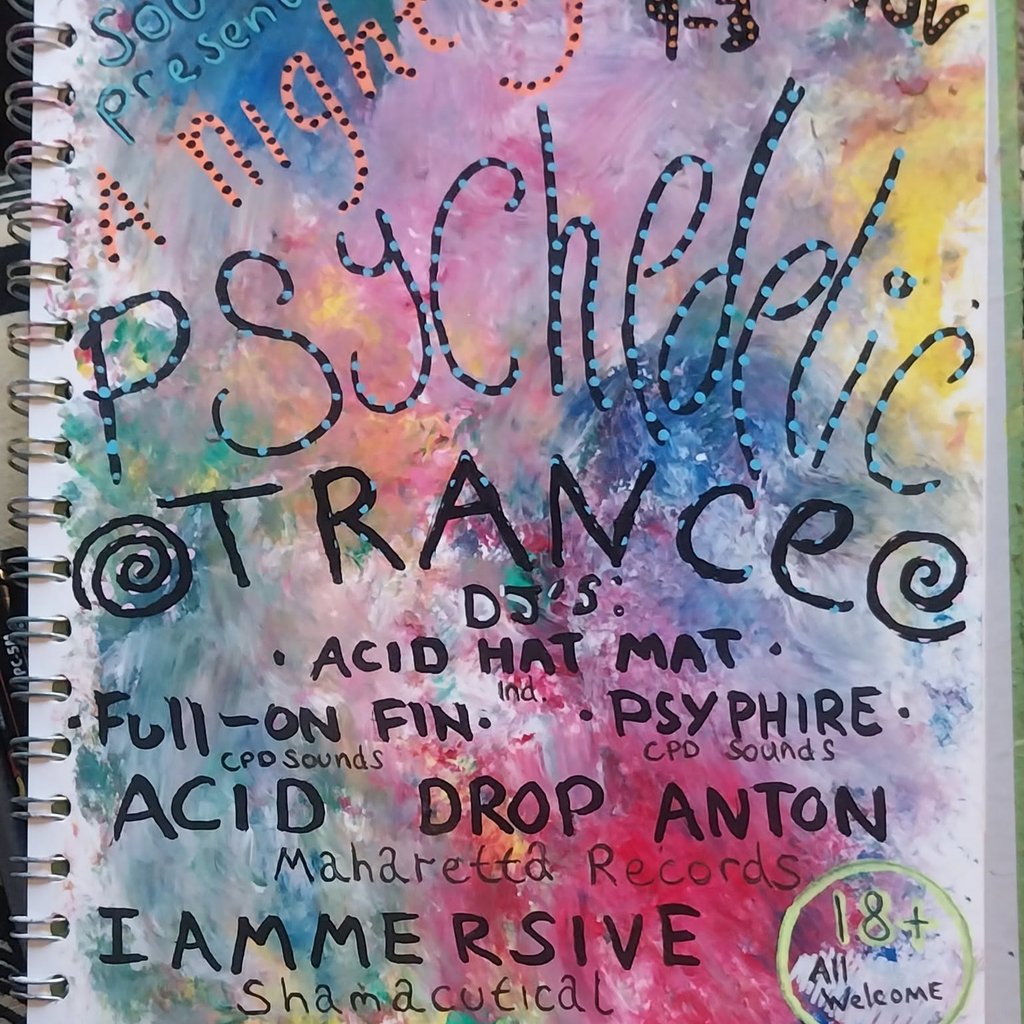
 A Night of Psychedelic Trance
Psytrance£10

Psytrance is built on a fast, rolling bassline and layers of synth work that keep shifting underneath it, generally sitting in the 140–150 BPM range, with densely-layered surreal sound design that often references altered states of consciousness. Rather… Read our guide to Psytrance ↓
1 event found
Fri27Nov Psytrance is built on a fast, rolling bassline and layers of synth work that keep shifting underneath it, generally sitting in the 140–150 BPM range, with densely-layered surreal sound design that often references altered states of consciousness. Rather than one big drop, a track tends to build steadily over several minutes, adding and stripping back percussion and effects to create a hypnotic feel rather than a sudden peak. You'll often hear sampled voices, sci-fi textures and odd found sounds woven through the mix, alongside spin-off styles such as the bouncier, melodic full-on sound and the slower, more ambient psychill, which focuses on relaxation and deep introspection, merging ambient textures with gentle trance rhythms.
The sound has its roots on the beaches of Goa, where a long-running traveller scene saw DJs play imported electronic body music, industrial and early acid to crowds that stayed until dawn, with early DJs working largely from DAT tape rather than vinyl. By the early nineties the music had a name and a home in London: Dragonfly Records released the compilation Project II Trance in 1993, and in 1994 Graham Wood and Raja Ram of The Infinity Project founded TIP Records together with Ian St Paul. A wave of other London labels followed, and the sound reached a wider UK audience when Paul Oakenfold championed it on BBC Radio 1's Essential Mix, giving it a mainstream foothold in the UK. Simon Posford and Raja Ram's project Shpongle, recording as Twisted Records, became known for infusing ambient and world music into classic psytrance basslines, while British producer Martin Freeland, performing as Man With No Name, has been influential in the psytrance scene since the 1990s. Crucially, the scene stayed on its own terms: it did not restructure itself around that success, keeping its own festivals, labels, release cycle and audience, largely outside the Beatport-and-Ibiza economy.
London and Bristol remain the two cities where it's easiest to find a proper psytrance night. London's IllumiNaughty marked its twentieth anniversary with an indoor event billed as "20 Years Of IllumiNaughty: The Legacy Event", bringing an indoor psytrance experience to London for one night. In Bristol, TRiBE of FRoG run multi-room parties at Lakota spanning several genres on different floors, and Planet Shroom at the Trinity Centre has built a reputation locally as a psytrance night known for its production standards, lasers and cutting edge psychedelic tunes. Expect proper sound systems, immersive decor and lighting, and a crowd that's there for the whole arc of the night rather than a single big tune.
Pace yourself: sets are long and the energy builds gradually, so