
Bagley’s
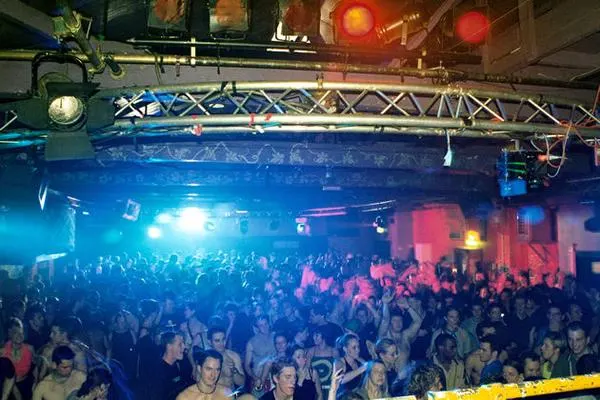
The story of Bagley’s
Bagley's was a large warehouse club in King's Cross, London, built inside a Victorian structure that began life storing coal for the railways before becoming a glass warehouse for the Yorkshire firm Bagley, Wild and Company, whose name stuck to the building. By the late twentieth century the area around King's Cross had become derelict, and it was this rough, unregulated backdrop that made the warehouse perfect for the warehouse raves that started there in the late 1980s, officially opening as a licensed venue in 1991 under operator Tony Askew.
The club grew in significance just as the UK government cracked down on illegal outdoor raves, culminating in the Criminal Justice and Public Order Act 1994, and Bagley's offered ravers a legal indoor alternative with the same free-wheeling spirit. Early nights such as Freedom, Philip Sallon's Mud Club and the Pussy Posse Party established its reputation, while the venue's several rooms and outdoor terrace allowed many different scenes to run simultaneously under one roof. As the decade progressed, harder dance promoters including Labrynth, Raindance, World Dance and Slammin' Vinyl took over much of the programming, with Slammin' Vinyl holding more raves there than any other promoter and giving King's Cross some of its most celebrated drum & bass and hardcore nights.
Bagley's played host to some of the biggest names in jungle and drum & bass, with DJs such as DJ Hype, Andy C, Brockie, Nicky Blackmarket, Kenny Ken, Ray Keith, Jumpin Jack Frost and Mickey Finn regularly appearing on the bill, often alongside MCs over multiple rooms of different genres. The venue also occasionally hosted secret shows by major artists including Prince, Massive Attack, Depeche Mode and the Rolling Stones, and was known locally by the irreverent nickname 'Gurnmills'. Sitting alongside neighbouring venues The Cross and The Key, it formed part of a short-lived but influential clubbing cluster that took advantage of King's Cross's then-tolerant, industrial surroundings.
In 2003 the club was taken over by Billy Reilly, owner of The Cross, and rebranded as Canvas, continuing to host electronic events though it never quite recaptured its earlier highs. The whole King's Cross goods yard site was earmarked for major regeneration, and Bagley's closed for good in January 2008 after a final New Year's Eve rave, with The Cross and The Key shutting around the same time. The site is now part of Coal Drops Yard, an upmarket shopping and leisure development, though the venue's legacy has been marked since with tribute events and documentaries, including Annie Mac's exploration of UK club closures, 'Who Killed the Night'.
Nights it hosted
Residents & regulars
Key moments
- 1991: officially opened by Tony Askew in a former Victorian coal and glass warehouse
- 1994: boosted by promoters moving indoors after the Criminal Justice and Public Order Act 1994 clamped down on illegal raves
- 2003: taken over by Billy Reilly and renamed Canvas
- 2008: closed in January after a final New Year's Eve rave
- 2017: site and story revisited in Annie Mac's BBC Three documentary 'Who Killed the Night'
- 2018: former site reopened as part of the Coal Drops Yard retail development
Sets & mixes from Bagley’s
Mixes hosted on Mixcloud by their uploaders. Tap to play.